
More Indian companies are opening a Sharjah office every quarter than most owners realise, chasing the UAE's tax position and its doorway into the Gulf. The part nobody plans for is the gap between "we signed the lease" and "we have a working office," and in that gap sits every desk, carton of files and unopened server box with nowhere to go. If your business is eyeing a Sharjah move, here is the storage piece of that plan.

Doorstep pickup is the same model whether the goods are moving into a Sharjah office or an Indian flat.
- Sharjah business storage runs on doorstep pickup, so an Indian firm's Sharjah team never has to find or drive to a warehouse.
- Every box and item gets a barcoded inventory, which matters when the person checking the list is sitting in Mumbai, not Sharjah.
- The same pickup-catalogue-retrieve model is used for offices, shops and warehouses, so it scales as the branch grows.
- Flexible plans mean a new branch can store furniture and stock without signing a long-term warehouse lease on day one.
- Items are insured while stored, which is one less thing for a head office managing risk from a distance to worry about.
Why This Comes Up for Indian Businesses Specifically
An Indian company setting up in Sharjah usually inherits a strange problem: too much stuff, too early. Office furniture arrives before the fit-out is finished. Stock lands before the shop shelving is up. Paperwork and compliance files pile up because nobody budgeted office storage into the first year. Back home, the instinct is to rent a bit of extra warehouse space and sort it later. In Sharjah, that "bit of extra space" is a commercial lease most new branches don't need yet. Doorstep pickup storage solves the same problem without the lease.
How Doorstep Pickup Actually Works
The process is built for people who are already stretched thin running a new branch:
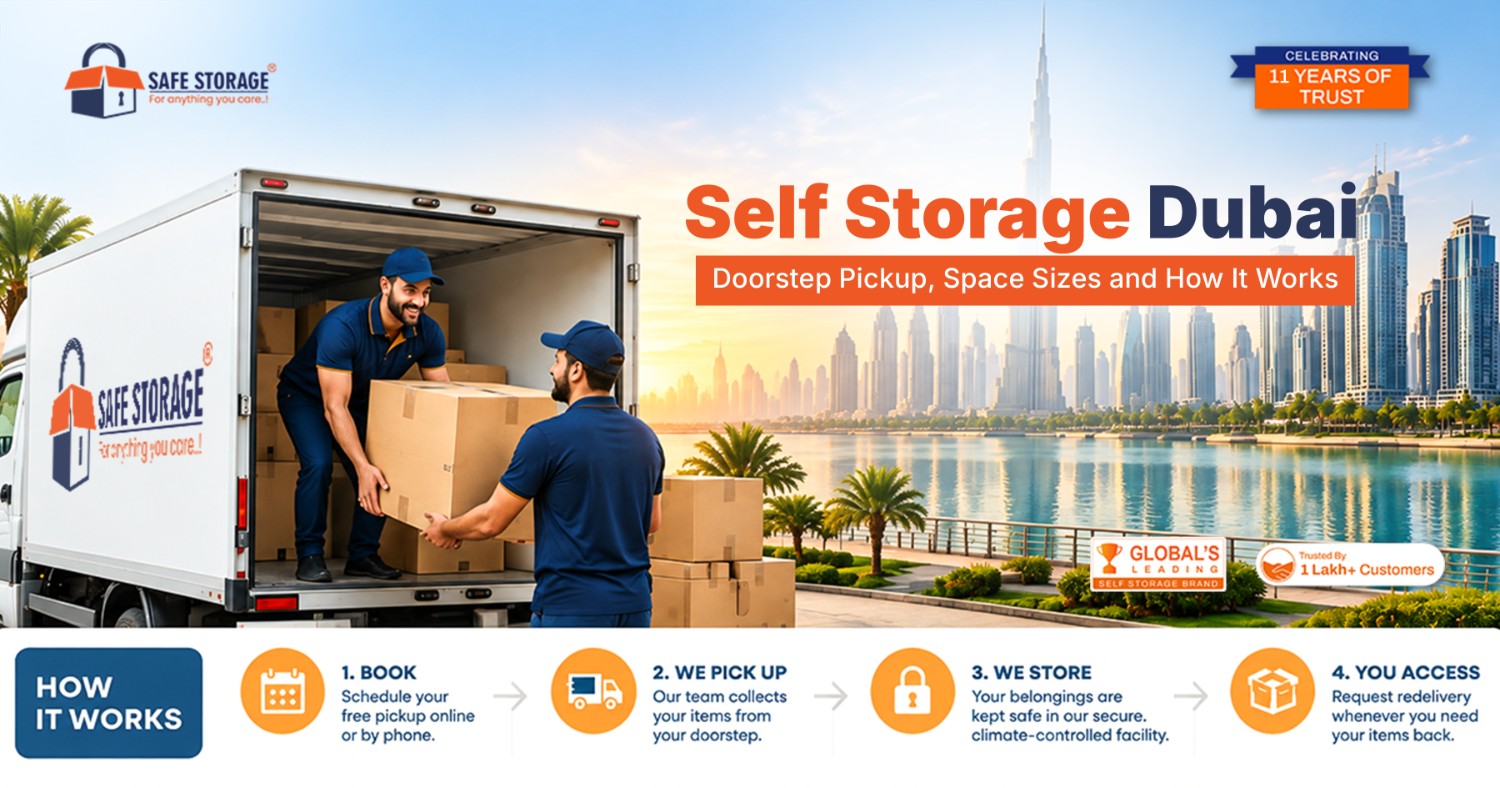
- SafeStorage collects the furniture, stock, documents or equipment directly from the Sharjah premises.
- Packing materials are used for anything fragile or awkward shaped before it's moved.
- Every box and item is barcoded and logged, so there is a digital inventory rather than a mental one.
- Goods are held at a guarded facility until the branch calls for them back, in part or in full.
Nobody on the ground has to drive a van to a storage yard, queue to drop boxes, or try to remember what went into which crate six months later.
What Usually Ends Up in Storage During a Sharjah Setup
| Branch Situation | What Typically Goes Into Storage |
|---|---|
| New office being fitted out | Desks, chairs, cabins ordered early |
| Shop or showroom opening | Stock and shelving before the unit is ready |
| Head-office archiving | Compliance files and records from the Indian parent |
| Warehouse or logistics branch | Equipment and pallets ahead of a lease start date |
Space is scaled to what a branch actually has, not a fixed warehouse unit.
Managing It From India While the Branch Runs Locally
The real advantage for an Indian head office is the barcoded inventory. A finance manager in India can ask what's in storage and get a specific answer, rather than a phone call to someone walking around a yard in Sharjah. When the branch needs one box of signed contracts back, that's a retrieval request against a known item, not a search.
Where This Fits Against Renting Extra Space
Commercial space in Sharjah is signed in multi-year terms more often than not. A branch that's six months old and still finding its footing rarely knows yet how much permanent space it needs. Storing the overflow and bringing it back as the office fills out avoids locking into a unit sized for a guess.
Can storage be arranged before our Sharjah office lease even starts?
Yes. Pickup can be scheduled for whichever premises goods are currently sitting at, including a temporary address, ahead of the office being ready.
Does the inventory list distinguish between individual boxes?
Each box and item is barcoded separately, so a single carton of files can be identified and retrieved without pulling out everything else.
Is this only for offices, or does it work for retail stock too?
It covers offices, shops and warehouses alike — the same pickup and barcoding process applies whether it's desks, shelving stock, or equipment.
What happens to stored items if we need them back on short notice?
A retrieval request is placed against the barcoded inventory, and the specific items are brought back rather than the whole consignment.
If your company is in the middle of a Sharjah setup and the furniture, stock or files have nowhere to sit, this breakdown from SafeStorage walks through exactly how the pickup and inventory process works for a new branch.

No comments:
Post a Comment