
More Indian entrepreneurs than ever are running a business that straddles two cities — a team in Bangalore or Mumbai, and a second office taking shape in Dubai or Abu Dhabi. The part nobody warns you about is how quickly the UAE side accumulates physical stuff: sample units, trade licence paperwork, a growing stack of boxes nobody has time to sort through.
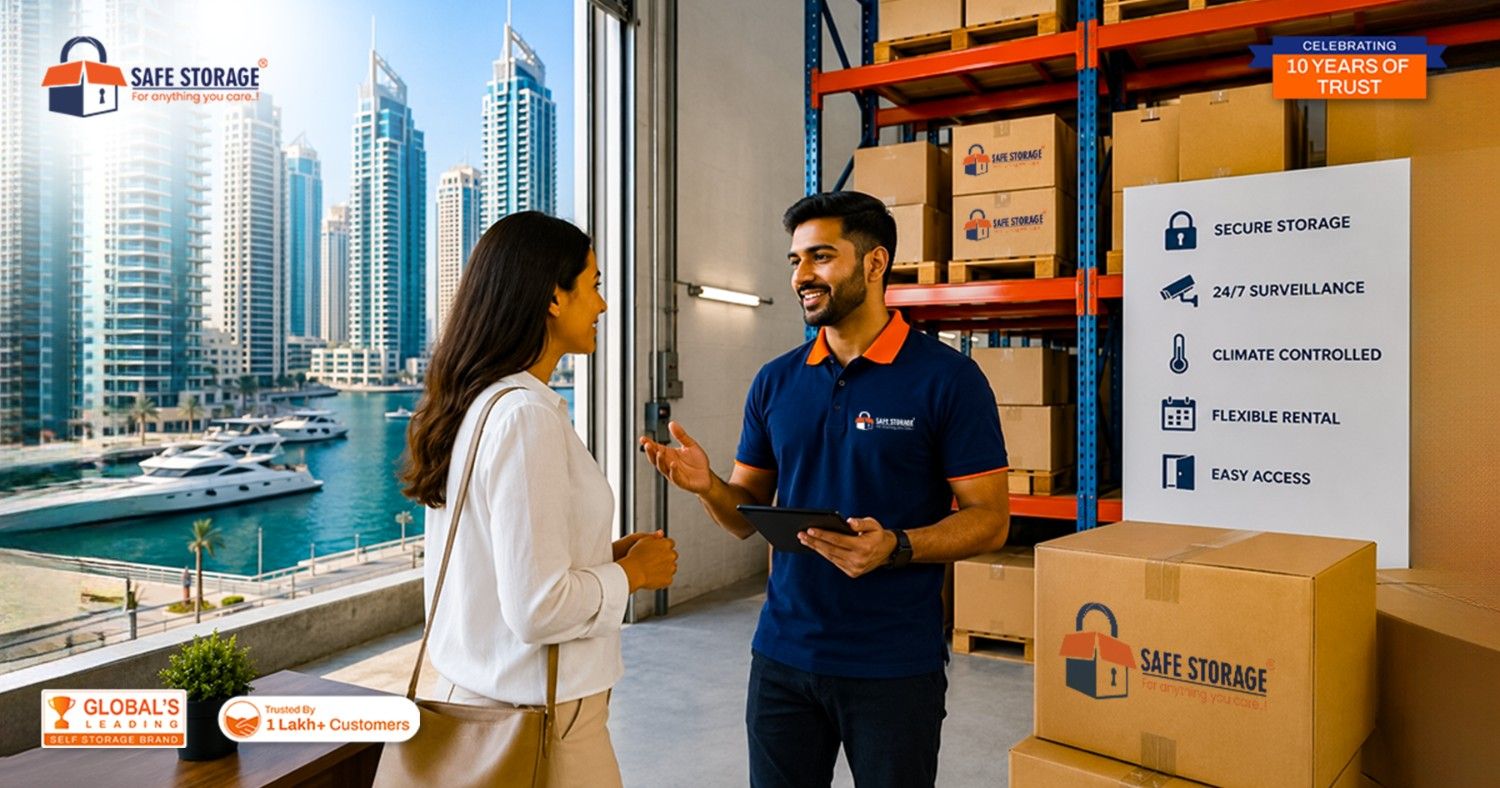
A UAE office often fills up faster than founders expect, especially in the first year.
- Running a business across India and the UAE means physical assets pile up on the side you visit less often.
- A guarded, inventoried storage space solves this better than an oversized office lease taken "just in case."
- Barcoded tracking lets a remote founder know exactly what's held without flying over to check.
- Teams should separate working stock from paperwork and equipment that's simply waiting to be needed again.
- Doorstep pickup matters most when the founder isn't in the country to manage it personally.
The Two-City Business Problem
When an Indian business owner opens a UAE branch, the instinct is often to rent office space sized for where the team will be in two years, not where it is today. That extra space ends up as an informal storeroom — stock in one corner, old furniture in another, a filing cabinet nobody has opened in months. It works until the lease renewal forces a decision, or until an employee can't find something important during an audit.
A better approach: keep the office sized for the working team, and move anything that isn't used weekly into a dedicated storage plan that the team can request from when needed.
What Dual-Country Founders Typically Need to Store
- Trade licence documents, contracts and tax records specific to the UAE entity
- Product samples and trial inventory before a formal distribution deal is signed
- Furniture and equipment left over from a smaller first office
- Marketing material used only at specific events or seasons
Comparing the Usual Options
| Option | Trade-off |
|---|---|
| Oversized office lease | Costly for space that sits mostly unused |
| Informal storage at a staff member's home | No accountability, hard to track as the team grows |
| Shipping items back to India | Expensive and slow for items that will be needed again in the UAE |
| Dedicated inventoried storage | Scales with the team, retrievable item by item |
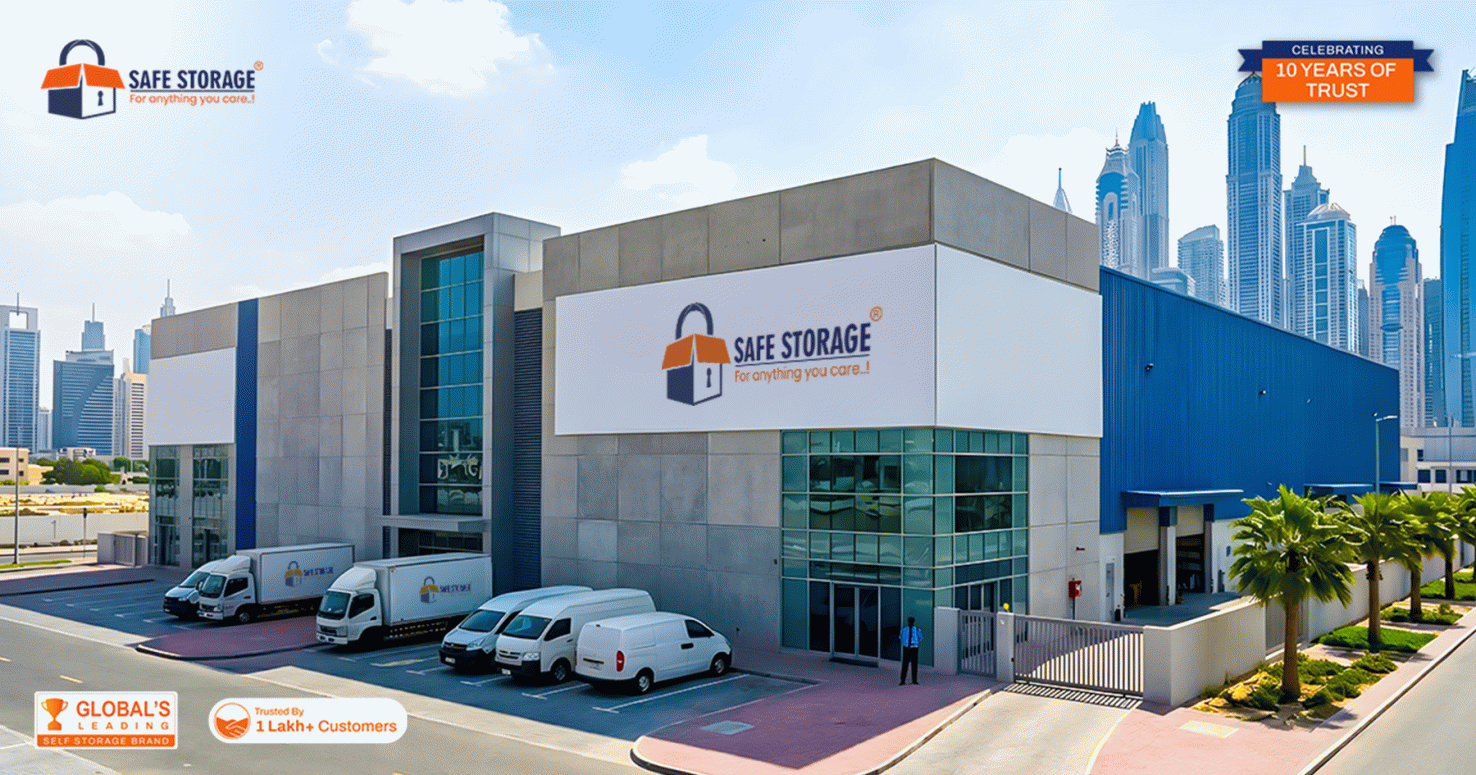
Startups in particular benefit from storage that scales rather than a fixed unit size.
Managing It From the India Side
Founders who still spend most of their time in India need visibility without needing to be physically present. A barcoded inventory system matters here specifically because it lets the founder or an India-based finance team confirm what's held and request documents back without anyone needing to fly over to check a cupboard.
This also solves a quieter problem: accountability when the UAE team changes. Staff on the ground come and go, and informal arrangements — a spare room at someone's apartment, a shelf in a shared warehouse a vendor offered for free — tend to fall apart exactly when a founder needs something urgently. A documented inventory outlives any single employee's tenure, which matters more than it sounds once a company has been operating in the UAE for a couple of years.
When This Becomes Urgent Rather Than Optional
Three moments tend to force the issue. The first is a lease renewal, when the cost of the extra "storage" space the office has informally become suddenly shows up as a line item worth questioning. The second is an audit or investor due diligence process, when someone outside the company asks where specific documents physically are. The third is simply running out of floor space before anyone planned for it. Businesses that set up proper storage before any of these moments arrive tend to handle them with far less scrambling than those that wait.
A Simple Framework Before You Sign a Bigger Lease
- List everything currently sitting unused in the UAE office
- Separate it into documents, stock and equipment
- Decide what genuinely needs daily access versus occasional retrieval
- Move the rest into storage before renewing or upsizing the office lease
Is it common for Indian founders to run a UAE branch without relocating full-time?
Yes, this is increasingly common, particularly for founders who split time between the two countries during the early growth phase.
Can storage be arranged without the founder being physically in the UAE?
Generally yes — a local team member or office manager can coordinate pickup, while the founder retains visibility through the inventory system.
What should be stored separately from general office items?
Trade licence documents, contracts and anything with a compliance or audit requirement should be tracked with more detail than general furniture or equipment.
Does this apply only to startups, or also to established businesses?
Both — established businesses opening a UAE branch face the exact same overflow problem as startups, just often at a larger scale.
Founders weighing up office space versus a proper storage plan for their UAE operations can see what's actually included at SafeStorage before committing to a bigger lease than the team currently needs.

No comments:
Post a Comment